NHS vs private dental negligence claims: what’s the difference?

Who is responsible when dental treatment goes wrong, and who pays to put things right? Sophia Courtaux, a solicitor in our specialist Dental Negligence Team, explains what patients need to know about NHS and private dental negligence claims.
When dental treatment goes wrong, your first concern is likely to be what can be done to put things right, particularly if you're facing pain, further treatment or an unexpected bill.
But does it matter whether the treatment was provided on the NHS or privately? And what if you've had a mixture of both?
The legal principles are largely the same, but there are some differences worth knowing about. These can affect who is responsible, what compensation you may recover and how you go about making a complaint.
Can I claim against an NHS or private dentist?
Yes. NHS and private dentists owe patients the same duty of care and must meet appropriate professional standards. Paying privately doesn’t give you a stronger negligence claim.
To bring a claim, you normally need to show that your treatment fell below the expected standard and caused avoidable harm. This could involve missed decay or gum disease, poor root canal treatment, avoidable tooth loss, nerve damage or treatment without properly explaining the risks and alternatives.
A disappointing result isn’t necessarily negligent. An independent dental expert will usually need to assess the treatment and any injury it caused. We explain more in our article on proving dental negligence.
| Issue | NHS dental treatment | Private dental treatment |
| Standard of care | Dentists must meet appropriate professional standards. | The same professional standards apply. |
| Who may be responsible? | The dentist, practice owner or relevant NHS organisation, depending on the circumstances. | The dentist, practice owner or company operating the clinic, depending on the circumstances. |
| Corrective treatment | Reasonable private corrective treatment costs may be recovered where negligence caused the need for them. | The same applies where negligent private treatment requires corrective work. |
| Contractual rights | Negligence claims are generally the main consideration, although other rights may arise. | Contractual remedies may also be available, including repeat treatment or a price reduction. |
| Complaints procedure | The dental provider or relevant NHS body, with possible referral to an ombudsman. | The dental practice, followed by the Dental Complaints Service where eligible. |
Who is responsible if an NHS dentist makes a mistake?
Many NHS dentists in high-street practices aren’t employed by the NHS. Often, they’re self-employed associates working in practices contracted to provide NHS treatment.
Depending on the circumstances, a claim could be brought against the dentist, practice owner or another legally responsible provider. A practice owner may sometimes be responsible for negligent care given by a self-employed associate.
If the treatment took place in an NHS hospital, the claim may instead be against the relevant NHS organisation. For private care, it may be against the dentist, practice owner or company running the clinic.
You don’t need to work out who’s responsible before asking for advice. Your solicitor can investigate.
Can I claim for private treatment to correct negligent NHS dental work?
Potentially, yes. Suppose you had negligent NHS root canal treatment and the tooth couldn’t be saved. An implant might cost several thousand pounds.
You may be able to recover the reasonable cost of private treatment, even though the original work was on the NHS. Compensation may also cover pain and suffering, lost earnings and other expenses.
That doesn’t mean you can choose any treatment and expect the cost to be covered. You’ll need to show it’s needed because of what went wrong and that the cost is reasonable. A dental expert can help with this.
NHS treatment doesn’t automatically restrict you to NHS corrective care.
What if I've had both NHS and private dental treatment?
It’s quite common to have NHS check-ups and fillings but pay privately for a crown, implant or other treatment.
That doesn’t prevent a claim. It does make it important to know which dentist provided each treatment and how the problem developed.
Dental records, X-rays, treatment plans, consent forms and invoices can all help. If you’ve changed dentists or sought a second opinion, those records may also help establish whether earlier treatment contributed to your difficulties.
Does paying privately give me any additional rights?
Private dental treatment will generally involve a contract between you and the provider. This can give rise to rights under contract law, as well as a possible negligence claim.
Under the Consumer Rights Act 2015, services must be provided with reasonable care and skill. Depending on what was agreed and what went wrong, you may be entitled to a refund, repeat treatment or damages for breach of contract.
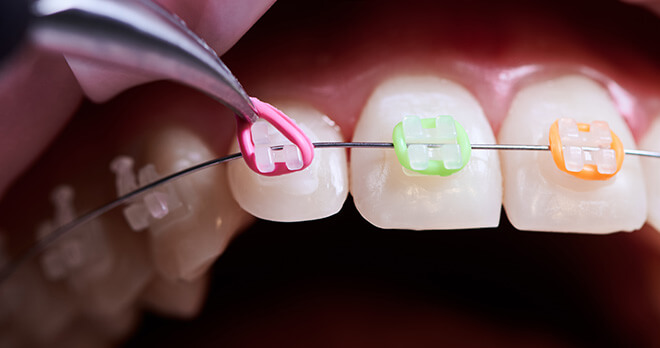
For example, if you’ve paid for orthodontic treatment that falls short of what was agreed, you may have a contractual claim even if you haven’t suffered any additional physical injury.
These rights aren’t unlimited, and an unsatisfactory cosmetic result doesn’t automatically establish a breach of contract.
Our article on bringing a claim following private dental treatment explores this distinction in more detail.
Are the complaints procedures different?
Yes, although you can usually start by raising your concerns directly with the dental practice, whether your treatment was NHS or private.
For private treatment, the Dental Complaints Service may be able to help if you haven’t been able to resolve matters with your dentist. It can assist with complaints involving refunds, apologies and contributions towards corrective treatment.
However, it cannot award compensation for injury, pain and suffering or lost earnings. Complaints to the service must also normally be made within 12 months of the treatment or of becoming aware of the problem.
For NHS treatment in England, you can complain to the dental provider or the relevant integrated care board. In Wales, complaints can be made to the provider or local health board.
If your NHS complaint remains unresolved after completing the appropriate complaints procedure, you may be able to refer it to the relevant ombudsman.
Complaining can help you obtain answers, but it isn’t the same as pursuing a negligence claim. Importantly, making a complaint doesn’t stop the legal time limit from running.
How long do I have to make a claim?
For a dental negligence claim involving personal injury in England and Wales, the usual time limit is three years from the date of injury or, if later, the date you first had the relevant knowledge of the injury and its possible connection with the treatment.
Different rules apply to children and people who lack the relevant mental capacity. Courts also have discretion to allow certain claims to proceed outside the normal time limit. Claims solely for breach of contract may be subject to different time limits, often six years from the breach. However, a contractual claim involving personal injury will not necessarily benefit from that longer period.
It’s sensible to seek advice early rather than assume you have plenty of time.
How can our Dental Negligence Team help?
If you’ve suffered avoidable harm following NHS or private dental treatment, you may be unsure whether you have a claim, who is responsible or how you’re going to afford the treatment needed to put things right.
You may also feel uncomfortable challenging a dentist you’ve trusted for years.
Our specialist Dental Negligence Team can help you understand what happened, investigate whether your treatment was negligent and explain your options. We appreciate that deciding whether to bring a claim isn’t always easy. Our aim is to give you clear, straightforward advice so you can make an informed decision about what to do next.
Got a question?
You can call the team on 0800 923 2080 or message them to understand more about you potential compensation claim for dental negligence. We will get back to you at a time that is convenient to you.
Common claim types





Insights and opinions
View more articles related to Cosmetic dentistry, Crowns and bridges, Dental implants, Dental nerve damage, Extractions, Gum disease, Information, Mouth cancer, Orthodontics, Root canal treatment, Tooth decay and Wisdom teeth